
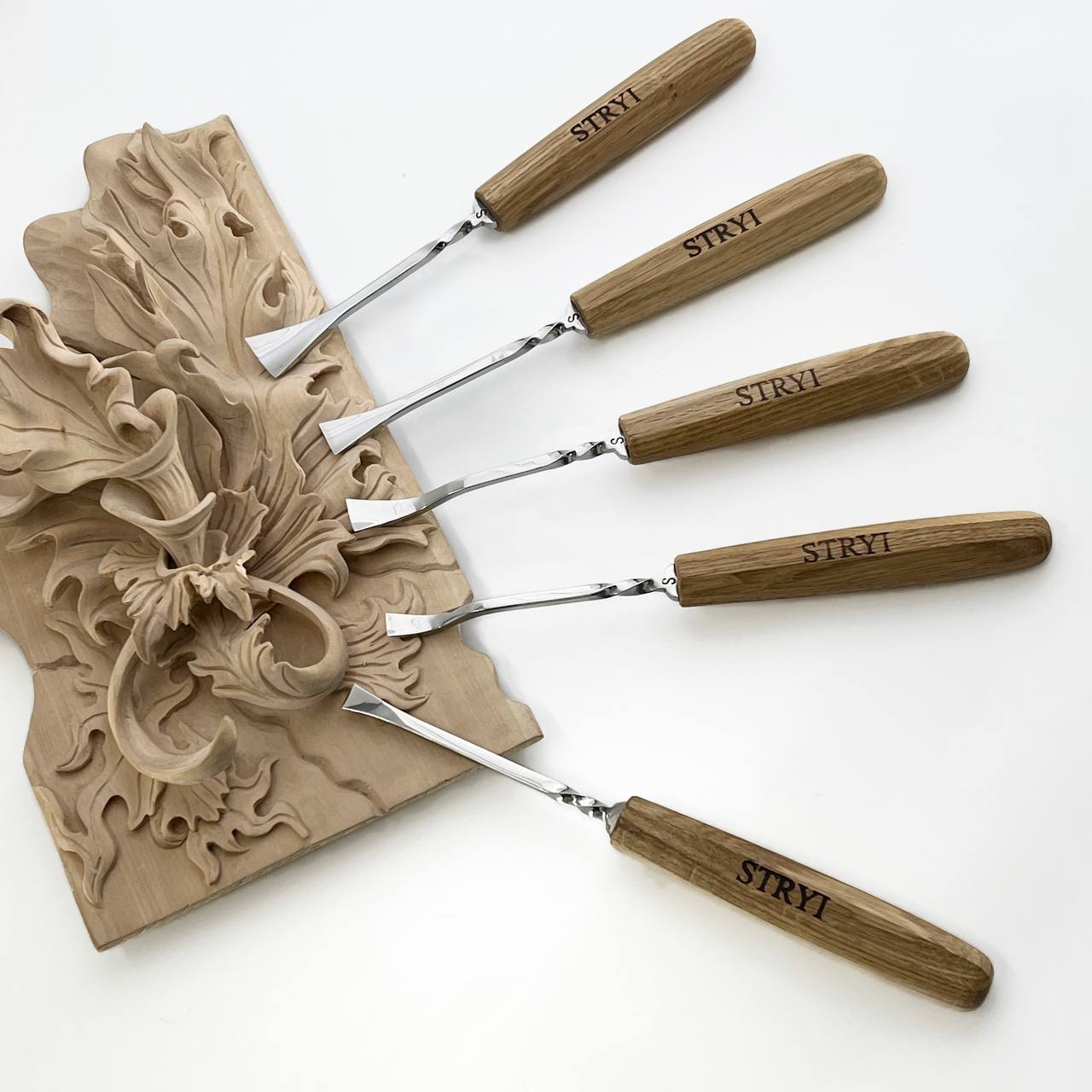
Mastering the Tight Spots: Introducing the New STRYI Maestro Fishtail Line (2026)
In the world of professional woodcarving, the difference between a good piece and a masterpiece often lies in the details that are the hardest to reach. This year, STRYI has officially launched its highly anticipated Maestro Fishtail Series, a line of tools specifically engineered to solve the most common headache for carvers: navigating deep recesses, tight corners, and complex undercuts.
At woodcarving-tools.com, we’ve put these new blades to the test. Here is why the new Fishtail line is becoming a staple on workbenches across the United States this season.
What Makes a "Fishtail" Unique?
Unlike a standard straight gouge, where the shaft remains the same width as the cutting edge, a Fishtail tool features a slender, tapered neck that flares out only at the very tip.
This "fish-tail" geometry provides:
-
Superior Visibility: Because the shaft is narrower than the blade, you can actually see exactly where your edge is meeting the wood.
-
Zero Interference: The slim neck prevents the tool from rubbing against the walls of your carving, allowing for "clean" cuts in deep relief or lettering.
The 2026 STRYI Maestro Advantage
While several European brands offer fishtail profiles, the new STRYI Maestro line introduces several upgrades that cater to the modern American artisan.
1. The W1-7 "Legendary" Carbon Steel
The core of the Maestro line is the W1-7 high-carbon steel, hand-forged and hardened to a precise 60–62 HRC. This isn't just about hardness; it’s about "toughness." The steel is tempered to hold a razor edge through dense American Black Walnut while remaining resilient enough to avoid chipping.
2. Ergonomic Oak "Maestro" Handles
STRYI has moved away from generic handle shapes. The new line features octagonal oak handles treated with natural linseed oil.
-
The Result: A grip that doesn't roll off your bench and provides tactile feedback, which is crucial when you're performing delicate undercuts where you can't see the blade's tip.
3. Precision Thin-Wall Geometry
The new 2026 series features a thinner blade profile than previous generations. This reduces the "wedging" effect, allowing the tool to glide through the wood with less effort—a massive plus for carvers who prefer hand-pushing over mallet work.
Essential Profiles in the New Line
The Maestro Fishtail line has been released in several key sweeps ($1$ through $11$):
| Tool Type | Best Use Case |
| #1F Flat Fishtail | Cleaning up backgrounds and leveling the floor of a relief carving. |
| #3F - #5F Shallow Gouge | Modeling delicate curves in hair, drapery, or floral petals. |
| #7F - #9F Deep Gouge | Undercutting and creating dramatic shadows in high-relief sculpture. |
Pro Tip: How to Sharpen the Fishtail
Due to the flared shape, many carvers fear sharpening fishtail tools. The key with the new Maestro series is to maintain the out-cannel bevel. We recommend using a slip stone or a specialized leather strop that matches the sweep. Because the steel is so high-quality, a few light passes on a strop every 20 minutes of carving will keep that "factory-sharp" edge for hours.
The Verdict
The 2026 STRYI Maestro Fishtail tools aren't just an addition to your kit; they are a solution. If you've ever struggled to clean out a corner or felt your tool was "too bulky" for the fine details of a face or a sign, this line was built for you.
Ready to reach those impossible corners? Explore the full STRYI Maestro Fishtail https://woodcarving-tools.com/collections/maestro-tools


Leave a comment
This site is protected by hCaptcha and the hCaptcha Privacy Policy and Terms of Service apply.